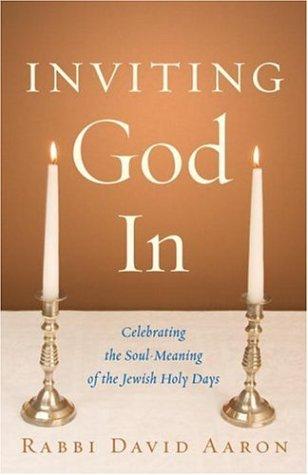
Inviting God In
Jewish Thought & MussarSelected Passages
Selected passages
How we refer to God depends on how we perceive a given encounter with the Divine Presence.
pleasure and joy can know pain and sadness. We live in a dualistic world. To be fully alive and aware, we must be willing to embrace the total spectrum of human emotions and experience. At the very breathtaking peaks of life are the beginnings of the slopes down. The mountains and the valleys are connected and one.
What do pain and joy have in common that they can both move us to tears? Both pain and joy can bring us face-to-face with the bedrock of life, and this encounter is overwhelming. Suddenly it hits us: This moment is real and life is overwhelmingly mysterious, miraculous, and incomprehensible. Our intellectual and emotional faculties, with which we generally grasp reality, are simply too small to capture the truth we face, and we break down in tears.
judgment is actually empowering. It tells me that God cares about my choices and that I make a difference in this world.
Yom Kippur is the Day of Atonement, which is defined by love and forgiveness. On Yom Kippur we get a glimpse of ourselves, our choices, and our relationship to God from another perspective—God’s perspective—and come to recognize how inseparably close we are to God. This is the transformative power of Yom Kippur.
On Purim we are able to say “blessed is Haman” because although he was evil, even Haman contributed to God’s plan for goodness. (How so? See chapter 9.) Yom Kippur is like Purim because on that day even our misdeeds can be seen as positive forces in serving God’s will and plan. Therefore, on Yom Kippur God forgives us and we can forgive ourselves. The darkness can serve the light, and the ugly past can be recycled into a beautiful future.
Yom Kippur is a mikvah in time. It is a day when we can immerse ourselves in the all-embracing oneness of God and emerge pure. On that day the light of the World to Come shines into the world, and we can see ourselves and our actions from God’s perspective. In that light, even our transgressions of the past become blessings for our future, the darkness now serves to enhance the light, and the ugly conflicts now increase the splendor and beauty of the love we share with God.
From Rosh Hashanah until Yom Kippur, we work our way back from disintegration to wholeness and happiness. On Sukkot we reach the finish line and celebrate becoming whole again.
I find that when people are first exploring Judaism, they often expect it to be logical and explainable. But if we could explain it all, then that would mean that the Torah is completely reasonable and rational. If the Torah were completely reasonable and rational, we wouldn’t need a God to reveal it