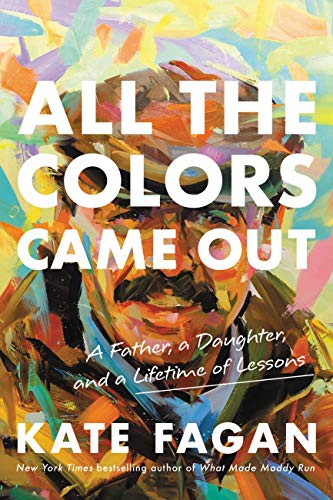
All the Colors Came Out
Personal Growth & WellbeingBiography & MemoirSports & CoachingSelected Passages
Selected passages
In his mind, flashiness was desperation, which revealed insecurity
This was the beginning of my education about what dreams actually are. They’re hard work. They’re a shimmering blacktop in the summer heat.
We had parents who held us steady without holding us still.
“Why don’t you ever let me win?” “Do you want me to let you win?” “Well—no,” I said. “Why?” he asked back. “Why what?” “Why don’t you want me to let you win?” “Because that would be a lie. You’d be lying to me.”
“Ultimately, the school doesn’t know what’s best for you, we do,” he said. “And all I hoped for you and Ryan is that you’d find something you love and work hard at it. And you’re doing that. I’m not sure what a perfect record at school proves to anyone except that you know how to follow rules—and that’ll only get you so far. So, yeah, I think no school tomorrow, or Friday, and we watch the games together.” ... I would stay home on the first two days of the NCAA tournament and watch the games with my dad. The beginning of this tradition also marked the establishment of a new household policy: I was allowed to take mental health days or go in to school an hour late anytime I deemed necessary. Included in this rule, but never explicitly stated, was that I never abuse the privilege.
My dad’s life was built around simple pleasures, and over the years he found increasing joy and meaning in each one: a decent coffee, a long walk, talking each day to his kids, a drive while listening to the ball game, a good sweat, the Sunday crossword puzzle with my mom. Note: strive for this!
We were tiptoeing around words, stripping them of their clarifying power.
I asked, “Why’d you do that—close your eyes and use the backboard?” “To show you that I could.” “Kinda felt like showing off,” I said. “Isn’t that like…bragging?” “Maybe, in some situations,” he said. “But even more important is that you don’t hide your greatness. You have to let people see it. And sometimes let people see it in full force. You can’t make yourself lesser, smaller, just to make people feel better. When you work hard to become great at something, that’s your greatness. You own it—not other people.” My growing brain was trying to process this in real time, and I said, “So why did you just bank in the free throw?” “You tell me,” he said. “How did it make you feel?” “Besides just annoyed at you, I was impressed. It made me feel like there’s another level to reach, if I wanted to.” “Well, then, mission accomplished,” he said. “Okay, so the rule is that I can go around…being great, just not going around telling everyone I’m great?” “That’s right: be as great as you can be.”
When my dad said to always keep a pair of sneaks in the trunk, he meant it literally. But he also meant that life could sometimes conspire against us, create friction, convince us that doing what we love is a hassle, not a joy. Our goal is to not let it.
I learned, right then, that you’ll never know what stays with you, what you’ll still be thinking about in the final hours of your life.
I thought back to the summer before, when we were at the basketball court and we both realized he’d never again shoot a basketball. It’s not always a gift, knowing it’s the last time.
I don’t remember the last words I spoke to my dad. And I’m glad I don’t. Why should one sentence matter more than the millions that came before?